Showing posts with label potatoes. Show all posts

17 March 2013

Promesas (poronkäristys – Lappish sautéed reindeer)

(English version below)

Ya os prometí hace casi un año que cuando las nieves volvieran a asomar os invitaría a poronkäristys, la forma más tradicional de cocinar reno en Cardamomoland. A estas alturas del invierno, las nieves no solamente han asomado, sino que han copado el paisaje desde hace unos cuantos meses y empiezan a estar guarrunas, signo inequívoco de que la primavera se acerca. Así que antes de que este invierno por fin diga “moi moi” (adiós en cardamomés) tengo que cumplir mi promesa.

Este es el plato más típico de la cocina lapona y una receta estrella de la cocina finlandesa. Al contrario de lo que mucha gente piensa, en Cardamomoland no se come reno día sí, día también; de hecho es bastante escaso, caro y, a veces, difícil de encontrar (aclaración: reno puedes comprar en cualquier supermercado pero para comprar reno del bueno necesitas “contactos”).

En la receta tradicional de poronkäristys el reno es cortado en lascas finas cuando está congelado. En los supermercados ya se suele vender cortado y congelado y para cocinarlo se descongela parcialmente, lo suficiente para que no sea un bloque de carne.

En la versión original lapona, el reno se fríe en mantequilla y se cuece en agua, añadiendo únicamente sal y pimienta negra. Existen otras versiones más modernas que añaden bacon, cebolla, cerveza, ajo y otros condimentos. Esta es la mía, espero que os guste.


Poronkäristys


Poronkäristys (estofado lapón de reno)


Ingredientes (para 5 – 6 personas):

750 grs de carne de reno para estofar
100 grs de bacon
1 cebolla roja
1 cucharada de mantequilla
1 lata de cerveza (33 cl)
150 ml de agua
2 hojas de laurel
Pimienta negra molida
Sal

Para acompañar:

Puré de patatas cremoso
Mermelada de arándanos rojos


Modus operandi:


1. Calienta la mantequilla en una olla grande. Cuando se haya derretido, añade la cebolla cortada finamente y déjala cocinar un par de minutos.

2. Por otro lado, pica el bacon en trozos pequeños y fríelo en una sartén en su propia grasa. Añade el bacon (y la grasa) y la carne de reno a la olla y sofríelo todo junto. Salpimenta.

3. Añade las hojas de laurel y vierte la cerveza y el agua en la olla. Tapa la olla y deja cocinar todo junto a fuego lento durante 1 hora y media.

4. Sirve con puré de patatas cremoso y mermelada de arándano rojo.


*Si no os es posible acceder a la carne de reno, también podéis preparar este plato con ciervo u otro tipo de venado.

Hyvää ruokahalua!


*****
Poronkäristys

Promises


I promised you almost one year ago that when the snow would knock at my door again I would invite you to poronkäristys, the most traditional way to cook reindeer in Cardamomland. Well, snow knocked, came in and stayed for some months already, and it's even starting to look dirty, which is a clear sign of the spring coming. So before this winter says definitely “moi moi” (goodbye in Finnish) I have to keep my promise.

This is the most typical dish of the Lappish cuisine and a top recipe of the Finnish gastronomy. Unlike a lot of people think, in Cardamomland people don't eat reindeer very often, in fact it's quite scarce, expensive and sometimes hard to find (well, you can buy reindeer in any supermarket, but if you want something really good you need some “contacts”).

In the traditional recipe of poronkäristys the reindeer is cut into fine pieces when it's still frozen. They usually sell it already cut and frozen in supermarkets and it's not necessary to unfreeze it completely to start cooking it (just enough that it's not a big piece of meat).

In the genuine Lappish recipe, the reindeer is sautéed in butter and cooked with just water, salt and black pepper. There are other modern versions including bacon, onions, beer, garlic and some other condiments. This is my own, I hope you like it.

Poronkäristys (Lappish sautéed reindeer)


Ingredients (serves 5 – 6 people):

750 g reindeer meat (for sautéing)
100 g bacon
1 red onion
1 tbsp butter
1 can of beer (33 cl)
150 ml water
2 bay leaves
Ground black pepper
Salt

Garnish:


Creamy mashed potatoes
Lingonberry jam


Modus operandi:


1. Heat the butter in a big pot. When melted, add the onion, finely chopped, and let it cook for a couple of minutes.

2. On the other side, cut the bacon into little pieces and fry it in a pan in its own fat. Add the bacon (and the fat) and the reindeer meat to the pot and sauté all together. Season with salt and pepper.

3. Add the bay leaves and pour the beer and the water into the pot. Let it cook covered at low heat for 1 hour and half.

4. Serve with creamy mashed potatoes and lingonberry jam.


*If you can't get reindeer meat, you can use other kind of deer for this recipe.

Hyvää ruokahalua!

27 February 2013

50 horas (potato and eggplant omelet with almond sauce)

(English version below)

Hace un par de semanas mi señora madre me preguntó en una de nuestras eternas skype-conversaciones si no estaba ya un poco hasta la peineta del invierno. Contesté que no. Que, como dicen los suecos, no hay mal tiempo sino malas vestimentas y que lo de la oscuridad pues bueno, se va llevando.

50 horas de sol son las que estima el Instituto de Meteorología Finlandés que hemos disfrutado este invierno en Helsinki. Teniendo en cuenta que además trabajo en turno de mañana en un recinto sin ventanas, supongo que he podido ver el sol un par de horitas este invierno. El resto del tiempo era de noche o lo parecía, e incluso habiendo superado el miedo galo a que el cielo caiga sobre mi cabeza, la cosa es que después de unos cuantos meses de invierno, he cambiado de idea.

Estoy harta.

Ya.

Mucho.

Hoy he visto el sol (sí, en serio), así que hay que celebrarlo con algo especial. Y aunque haya buena vestimenta a mí me apetece un plato calentito donde poner a nadar una buena barra de pan.

Algo bueno tendrá el invierno perpetuo, ¿no?


omelet with almond sauce


Tortilla de patatas y berenjenas en salsa de almendras


Ingredientes (para una tortilla mediana)


700 grs de patatas
1 berenjena pequeña (250 grs)
½ cebolla
4 huevos L
Aceite de oliva virgen extra
Sal

Para la salsa:


20 almendras
3 dientes de ajo
1 rebanada de pan
½ cucharadita de ras el hanout
400 ml de caldo de pollo
Aceite de oliva virgen extra


Modus operandi:

1. Precalienta el horno a 200 C.

2. Pela las patatas, lávalas y córtalas en láminas finas. Sálalas y ponlas a freir en abundante aceite de oliva a fuego lento (la intención es que queden suaves, no crujientes). Añade la cebolla picada finamente y deja cocinar junto con las patatas hasta que estén tiernas. Saca las patatas y la cebolla del aceite y colácalas sobre un escurridor para que pierdan el exceso de aceite.

3. Mientras tanto, corta la berenjena en dos longitudinalmente y colócala con la piel hacia abajo en una bandeja resistente al horno. Realiza unos cortes en la superficie de cada mitad y añade un poquito de sal y unas gotas de aceite de oliva. Hornea la berenjena durante 15 minutos, o hasta que la carne esté suave.

4.  Retira la carne de las berenjenas con una cucharilla. Pícala groseramente y añádela a la mezcla de patatas y cebolla.

5. Bate los huevos en un cuenco grande. Añade las patatas, cebolla, berenjena y un poquito de sal y mezcla bien.

6. Pon una sartén mediana a fuego fuerte con una cucharada de aceite de oliva. Cuando esté bien caliente, vierte el contenido del cuenco, cambia el fuego a medio y deja que la tortilla cuaje un poco. Dale la vuelta con ayuda de un plato y repite la operación: primero fuego fuerte y luego fuego medio. Retira la sartén del fuego y reserva.

7. Pela los ajos y fríelos enteros en una sartén con un par de cucharadas de aceite de oliva. Cuando estén dorados, retíralos y añade las almendras. Fríelas con cuidado de que no se quemen, retíralas y añade el pan. Cuando el pan esté dorado y crujiente, colócalo en el mortero, junto con los ajos y las almendras. Machaca bien estos ingredientes juntos hasta conseguir una pasta (también puedes utilizar una trituradora) y reserva.

8. Vierte el caldo de pollo, la mezcla de ajos, almendras y pan, el aceite de freírlos y el ras el hanout en una sartén grande. Ponlo a fuego lento durante 20 minutos (tapa la sartén para que no se evapore el caldo). Corta la tortilla en trozos, pínchalos varias veces con un palillo y añádelos a la salsa. Deja cocinar todo junto unos 10 minutos más.


No hay invierno que cien años dure... qué aproveche.


*****
omelet with almond sauce


50 hours


A couple weeks ago, while having a never-ending skype-conversation, my dear mother asked me if I was absolutely sick of winter already. I answered “no”. And, “as Swedish say, there's no bad weather but bad clothing, and about darkness... well... it's ok”.

50 hours. That's the estimation made by the Meteorological Finnish Institute about the hours of sun we could enjoy in Helsinki during this winter. If you consider that I work on morning shift in a place with no windows at all, I guess I've seen the sun a couple of hours this winter. The rest of time it was night or it looked like it, and even after leaving the Gallic sky-falling-on-my-head fear behind, after several months of winter, I have changed my mind.

I'm annoyed.

Already.

Very... annoyed.

Today the sun has been shining (yep, really) so we have to celebrate with something special. And even with the right clothing I prefer something warm where I can dip a big piece of bread.

Perpetual winter might have something good... doesn't it?


Potato and eggplant omelet with almond sauce


Ingredients (makes 1 medium omelet)

700 g potatoes
1 small eggplant (250 g)
Half an onion
4 large eggs
Extra virgin olive oil
Salt

For the sauce:

20 almonds
3 garlic cloves
1 slice of bread
½ tsp ras el hanout
400 ml chicken stock
Extra virgin olive oil


Modus operandi:

1. Preheat the oven to 200 C.

2. Peel the potatoes, wash them and cut them into fine slices. Season with salt and put them to fry with plenty of olive oil at low heat (we want to get soft, tender potatoes, not crunchy). Add the onion, finely chopped, and let it all cook until the potatoes are tender enough. Take the potatoes and the onion out and place them on a strainer, to drain the extra oil.

3. In the meanwhile, cut the eggplant lengthwise in two pieces and place them with the skin facing down in a oven proof plate. Make some cuts on the surface of each piece and add a pinch of salt and some olive oil drops. Bake the eggplant for 15 minutes or until tender.

4. Remove the flesh of the eggplant with a spoon. Cut it into irregular pieces and add them to the mix of potatoes and onion.

5. Beat the eggs in a big bowl. Add the potatoes, onion, eggplant and a pinch of salt. Mix well.

6. Heat a medium frying pan at high temperature with a tablespoon of olive oil. When the oil is very hot, pour the mix into the frying pan and cook the omelet at medium temperature. When it starts to curdle, turn it upside down with a dish and repeat: first high temperature and then medium. Take the frying pan away from the source of heat and reserve.

7. Peel the garlic cloves and fry them in a frying pan with a couple tablespoons of olive oil. When golden, take them away and add the almonds. Fry them carefully, they burn very easily. Take them away and add the bread. When the bread is golden and crunchy, place it in a mortar, together with the garlic and the almonds. Crush all the ingredients together until you get a paste (you can do it also using a food processor) and reserve.

8. Pour the stock, the paste, the oil used to fry the ingredients of the paste and half a teaspoon of ras el hanout in a large frying pan. Cook all the ingredients together for around 20 minutes (cover the pan so the stock doesn't evaporate). Cut the omelet into pieces, poke each one with a skewer a couple times and add them to the sauce. Let it cook for 10 minutes more.


Qué aproveche.

04 December 2012

Lo que “Antti” hizo (siskonmakkarakeitto – sister's sausage soup)


(English version below)

Os preguntaréis quien es Antti, ¿no? Pues Antti es la tormeta de nieve que nos hizo la Pascua el viernes pasado. Si le han puesto hasta nombre... imagináos.

Cualquier vídeo, foto o enlace que os pase no reflejará la realidad que viví el viernes cuando salí a trabajar, porque en esas condiciones no había cámara que sobreviviese a una captura del momento. En dos minutos yo tenía nieve hasta en los bolsillos, el viento me llevaba de un lado a otro como si me hubiese puesto hasta arriba de chupitos de salmiakki y no veía más allá de mis narices. Por suerte, tengo un piloto automático espectacular que nos llevó a mí y a otra chavala que se había perdido en la urbanización (creedme, no es nada del otro mundo) hasta las puertas del metro. Y allí, otra odisea. Ni metro, ni tranvía, ni autobuses... en fin.


La nieve llegó a las lámparas de City Käytävä - Snow reached the lamps at City Käytävä


El caso es que llegué, tarde pero sana y salva (o eso pensé yo). No pudieron decir lo mismo todos los que abarrotaron las urgencias de los hospitales de Helsinki (sólo en el barrio de Töölö hubo más de 60 asistencias por traumatismos).

Por suerte esta ciudad está preparada para eso y mucho más, y aparte del colapso inevitable del servicio de transportes, en un día pasamos de montañas descontroladas de nieve por todas partes a un precioso paisaje de invierno.

Auténtico invierno finlandés.

Aquí os dejo algunas fotos de lo que Antti hizo.


Helsinki Cathedral (Tuomiokirkko)
Catedral de Helsinki - Helsinki Cathedral

Helsinki downtown
Centro de Helsinki - Helsinki downtown


Ah sí. Si os preguntáis lo que me hizo Antti a mí, no estoy muy segura, pero de pronto mis amígdalas tienen el tamaño de pelotas de golf y están estratégicamente situadas para que por ahí no pase ni una aguja a martillazos. No estoy segura de que sea toda su culpa, pero me temo de Antti algo ha tenido que ver.

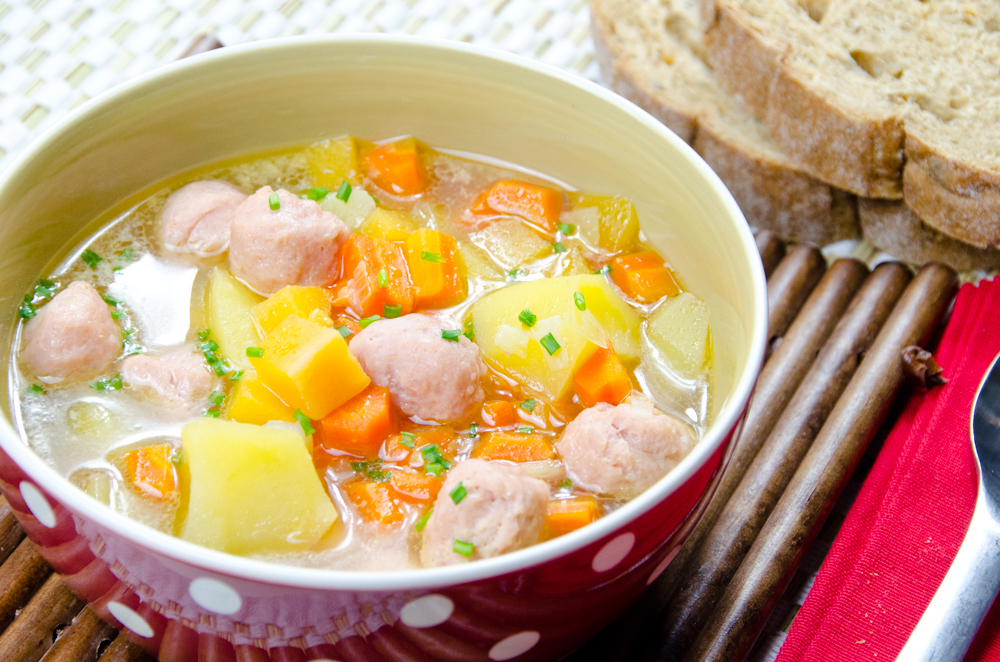
El viernes por la noche, para recuperarnos de la aventura, preparamos esta sopa típica finlandesa. Si hay algo que le guste a los finlandeses casi al mismo nivel que la cerveza, yo diría que son las salchichas. Para preparar esta sopa al más puro estilo nórdico son necesarias unas salchichas llamadas “siskonmakkara” (salchichas de la hermana – sí, en serio). Con otras ya no será “siskonmakkarakeitto”, será “makkarakeitto” (sopa de salchichas), a secas. La típica es ésta y así os la muestro.


siskonmakkarakeitto


Sopa de salchichas de la hermana (siskonmakkarakeitto)


Ingredientes (para 4 personas):


1,5 l de caldo de verduras (o de carne)
400 grs de salchichas de la hermana (siskonmakkara)
4 ó 5 patatas medianas
3 zanahorias
1 puerro
200 grs de colinabo
10 granos de pimienta negra
2 hojas de laurel
Sal
Cebollino o perejil fresco


Modus operandi:


1. Pela y pica la zanahoria, el colinabo y el puerro en trozos pequeños. Vierte el caldo en una olla grande y añade los ingredientes anteriores. Pela y pica las patatas en cachelos grandes (“rompiéndolas” para que suelten almidón). Agrega los granos de pimienta, el laurel y sal al gusto y ponlo a cocer todo junto.

2. Cuando las patatas estén casi listas, añade las salchichas. La forma tradicional es apretando la tripa y dejando caer trozos de salchicha que adquirirán forma de bola en el caldo. Deja la sopa cocer 15 minutos más y sirve con un poco de perejil o cebollino fresco picado.


*****
siskonmakkarakeitto


What “Antti” did


You are wondering who's Antti, aren't you? Well, Antti was the blizzard that visited us last Friday. You can imagine how huge it was if it even got a name... 

Any video, picture or link I could give you won't show the reality of what I experienced last Friday when I left to work. No camera would have survived that moment. In two minutes I got snow even inside my pockets, the wind was driving me in zig zag movements like completely stoned and I couldn't see anything 5 meters far away. Luckily, I have an excellent autopilot that drove me and one girl who got lost at the estate (believe me, it's not that big) to the metro station. And there, a new odyssey. No metro, no tram, no buses...

Finally I arrived, late but in one piece (or that's what I thought). All those who crowded the hospitals in Helsinki weren't so lucky (only at Töölö district more than 60 people suffered some kind of traumatism).

Luckily this city is prepared for that and much more, and the only problem was the inevitable transportation chaos. In only one day we changed the uncontrolled mountains of snow for a beautiful winter postcard.

True Finnish winter.

Here you have some pictures of what Antti did. 


Helsinki Kontula
My way to the metro station - Mi ruta hacia el metro


Helsinki downtown
Helsinki downtown - Centro de Helsinki


Ah yep. If you wonder what Antti did to me, I'm not completely sure, but suddenly my tonsils are golf ball sized and they took position so nothing goes through. I'm not sure Antti is the one to blame, but it's suspicious... at least.

On Friday night, to recover from the adventure, we prepared this typical Finnish soup. If there is something that Finns like as much as beer, I would say it's sausages. To prepare this very Nordic soup you will need some sausages called “siskonmakkara” (sister's sausage – yep, really). With other kind, it won't be “siskonmakkarakeitto” anymore, but only “makkarakeitto” (sausage soup). The typical is this one and here I show it to you.


Sister's sausage soup (siskonmakkarakeitto)


Ingredients (serves 4):

1,5 l vegetable (or meat) stock
400 g sister's sausages (siskonmakkara)
4 - 5 medium potatoes
3 carrots
1 leek
200 g rutabaga
10 black pepper corns
2 bay leaves
Salt
Chives or fresh parsley


Modus operandi:

1. Peel and chop the carrots, rutabaga and leek in small pieces. Pour the stock in a large pot and add the previous ingredients. Peel and chop the potatoes in big pieces, “breaking” them, so some starch comes out and thickens the soup a bit. Add the pepper corns, bay leaves and salt to taste and let it all cook together.

2. When the potatoes are almost ready, add the sausages. The traditional way is squeezing the casing and letting the sausage pieces drop into the soup, where they'll get a ball shape. Let the soup cook for 15 minutes more and serve with some chopped parsley or chives.

17 September 2012

Andalucía – Parte 2 (broken eggs with cured ham)


(English version below)

Después de la playa, las gambitas y el perreo, a Herra K y a mí se nos ocurrió un plan fabuloso. Léase “fabuloso” con una importante carga de ironía, y es que la idea no fue otra que entre Huelva y Jaén (casa de la mamma) hacer una parada en Sevilla. Ni siquiera dormimos allí, el plan era llegar por la mañana e irnos por la noche y echar un fantástico día de agosto con 43 ºC a la sombra en la capital andaluza.

La visita estuvo bastante bien para que un extranjero, nórdico para más inri, entienda que la siesta no es un caprichito patrio, que no somos vagos por naturaleza y que ir a Sevilla en verano es una actividad cercana al suicidio. No es por hacerle la pascua al turismo sevillano pero si no queréis arder como la tea no os plantéis allí en verano.


Total, que de lo que habíamos planeado ver a lo que realmente vimos hubo un trecho bueno y nos quedamos con la Catedral, los Reales Alcázares, la Plaza de España y el Parque de María Luisa. De allí a la Calle Sierpes, pastelito en La Campana (que, por cierto, tienen la fama que se merecen) y chimpún. Llegamos a Plaza de Armas arrastrándonos y rezando porque aquello se acabara y eso, teniendo en cuenta que no somos muy creyentes ninguno de los dos, es un detalle importante a tener en cuenta.

La receta de hoy es mi plato favorito por siempre jamás. No sé por qué capricho del destino no estaba en este blog todavía, pero desde luego esta es una buena excusa para publicarlo. Como la cosa va de platos andaluces ahí va mi propuesta de huevos rotos con jamón.


Huevos rotos con jamón


Ingredientes (para 2 personas):

4 patatas medianas
4 huevos
1 cebolla pequeña
50 gramos de jamón serrano, cortado en lonchas finas
Perejil fresco
Aceite de oliva virgen extra
Sal

Modus operandi:

1. Pela las patatas, lávalas y córtalas en láminas no muy finas. Sálalas y ponlas a freir en abundante aceite de oliva a fuego lento (la intención es que queden suaves, no crujientes). Añade la cebolla picada muy finita y deja cocinar junto con las patatas hasta que estén tiernas.

2. Por otro lado, fríe los los huevos en una sartén pequeña con 1 cm de aceite bien caliente (procura que la yema quede líquida, ahí está el éxito del plato).

3. Coloca las patatas y la cebolla (sin el aceite) en la base del plato, añade los huevos y rómpelos ayudándote de un cuchillo y un tenedor, dejando que la yema líquida impregne las patatas. Añade una pizca de sal a los huevos.

4. Por último, coloca el jamón encima de los huevos y termina añadiendo un poco de perejil fresco picado.

*Imprescindible una buena barra de pan para empujarse estos huevos y de postre, una buena siesta.

¡Qué aproveche!


*****

After the beach, the prawns and the lazy days, Herra K and me conceived a fabulous plan. Read “fabulous” with an important load of irony; the great idea was to make a stop in Seville on our way from Huelva to Jaén (mamma's house). We didn't even stay overnight, the plan was to arrive there in the morning and enjoy a fantastic August day with +43 ºC (109 ºF) in the Andalusian capital.

The visit was good enough to make a foreigner (a Nordic one!) understand that siesta is not a national whim, that we are not lazy by nature and that going to Seville in summer is something close to suicide. I don't intend to spoil the tourism in Seville but if you don't wanna burn like fire, just don't go there in summer.

So our plans were completely different to what we really did and we couldn't visit many parts of the city we would have liked to. We went to the Cathedral, Reales Alcázares, Plaza de España and María Luisa's Park. After that we went to Sierpes Street (the most famous street in Seville, full of shops), we had a snack in La Campana (place you cannot miss if you go there) and that's it! We arrived to the bus station dragging ourselves and praying for the end of the day and that, considering that none of us is a true believer, is something important to keep in mind.


Today's recipe is my favorite food forever and ever. I don't know why it wasn't in this blog yet, but I think this is a good moment to post it. Because this is about Andalusian food, here you have the famous broken eggs with cured ham “my way”. 

Broken eggs with cured ham


Ingredients (serves 2):

4 medium potatoes
4 eggs
1 small onion
50 g cured ham, finely sliced
Fresh parsley
Extra virgin olive oil
Salt


Modus operandi:

1. Peel the potatoes, wash them and cut them into not very fine slices. Season with salt and put them to fry with plenty of olive oil at low heat (we want to get soft, tender potatoes, not crunchy). Add the onion, finely chopped, and let it all cook until the potatoes are tender enough.

2. On the other side, fry the eggs in a small frying pan with 1 cm of hot olive oil (try to get a cooked white and a raw yolk, that's the secret of the recipe).

3. Place the potatoes and the onion (without the oil) on the dish, then add the fried eggs and break them with a fork and a knife, letting the liquid yolk wet the potatoes. Season the eggs with a pinch of salt.

4. Put the ham slices on the eggs and finish adding some chopped parsley.

*The way to enjoy these broken eggs is with a good white bread on the side. And a good siesta for dessert.

¡Qué aproveche!

27 May 2012

Una de eurofrikismo (salmon and potato salad with mustard and lemon vinaigrette)


(English version below)

Hoy debo confesar... que soy adicta a Eurovisión. Sí, sí, no me pierdo uno y me encanta lo de intentar adivinar los puntos de cada país y jugar a Risk. Siempre me lo paso bien y al final poco me importa quien gane o pierda o que España quede la primera por la cola o Finlandia no pase de semifinales. Pero ayer me aburrí bastante. Ganó quien ya se sabía, perdió quien ya se sabía y aquí acertamos casi todos los puntos, lo cual me pareció un supino coñazo (perdón). Pero hubo dos momentos mágicos: las abuelas rusas horneando empanadillas (Encannaaaa party for everybody!) y los puntos de Finlandia (barriendo para casa).

Porque claro, el resto de Europa se pone divina de la muerte para los “twelve points” y ahí se planta Finlandia con el monstruo que les ha dado la única victoria en Eurovisión. Y vaya victoria. Hicieron récord de puntos en la historia del festival y el año siguiente Helsinki se marcó una gala como pocas. El año que viene seguro que Suecia intenta currarse algo memorable.

Pues que no pierdan el tiempo. No ha habido ni habrá gala más original que la de Finlandia. En lugar de mostrar lo bonito y bucólico-campestre que es el país, los edificios de Alvar Aalto y otros orgullos patrios, Finlandia se marcó este “opening”.


Olé.

Y para celebrarlo una ensaladita post-festival con dos ingredientes que les gustan mucho a los finlandeses (y a los suecos, ya que estamos): salmón y patatas.


Ensalada de salmón y patatas con vinagreta de mostaza y limón

Ingredientes:

400 grs de salmón fresco

500 grs de patatas nuevas

½ cebolla morada

1 cucharada de alcaparras

100 ml de aceite de oliva virgen extra (y un poco más para marcar el salmón)

30 ml de zumo de limón

1 cucharada de mostaza a la antigua

Pimienta negra molida

Sal

Modus operandi:

1. Precalienta el horno a 180 C.

2. Limpia muy bien las patatas y cuécelas en abundante agua salada hasta que estén tiernas. Reserva.

3. Por otro lado, salpimenta el salmón y márcalo en una sartén con un poquito de aceite de oliva. Colócalo en una bandeja o recipiente para horno y hornéalo durante 10 - 12 minutos. Cuando esté templado, retira la piel del salmón y desmígalo con las manos.

4. En un cuenco aparte, mezcla el aceite, el limón, la mostaza y una pizca de sal y lígalo todo con unas varillas.

5. Coloca en un plato las patatas cortadas por la mitad, el salmón desmigado, unos aros de cebolla morada y las alcaparras. Aliña con la vinagreta de limón y mostaza.

Party for everybody!

*****


“Eurofreakism”

Today I must confess... that I'm addicted to Eurovision. Yep, I never miss the event and I love betting the points of each country and playing Risk. I always have fun and finally I don't care so much who wins or looses or that Spain is the last or Finland doesn't go over the semifinals. But yesterday it was pretty boring. We knew who was going to win, who was going to loose and we got almost all the points right. But there were two magic moments: the Russian grandmas baking pastries (party for everybody!) and the points of Finland (of course).

Because the rest of Europe try to look great with beautiful backgrounds and pretty people for the “twelve points” and here comes Finland with the monster that gave them their only victory. And what a victory. They made a score record and the next year Helsinki managed an unforgettable gala. I'm sure next year Sweden will try to do something memorable.

Don't waste your time. There will never be a more genuine gala than Finnish one. Instead of showing the beauty-bucolic side of the country, Alvar Aalto's buildings or some other typical stuff, Finland started this way.


Ole.

To celebrate it, here you have this after-festival salad, made with two ingredients that Finns (and Swedes) love: salmon and potatoes.

Salmon and potato salad with mustard and lemon vinaigrette

Ingredients:

400 g fresh salmon

500 g new potatoes

½ red onion

1 tbsp capers

100 ml extra virgin olive oil (and a little more to fry the salmon)

30 ml lemon juice

1 tbsp old style Dijon mustard

Grinded black pepper

Salt

Modus operandi:

1. Preheat the oven to 180 C.

2. Clean the potatoes and boil them in plenty of salted water until tender. Reserve.

3. On the other side, season the salmon with salt and pepper and lightly fry it for some seconds with a bit of olive oil. Place it in a baking tray and bake it for around 10 - 12 minutes. When lukewarm, remove the skin of the salmon and flake it with your fingers.

4. In a bowl, mix the oil, lemon, mustard and a pinch of salt with a whisk.

5. Place in a dish the potatoes, cut in half, the flaked salmon, some onion rings and the capers. Dress the salad with the vinaigrette.

Party for everybody!

22 March 2012

Esa Pera Aki (marinated chicken pyttipannu)

(English version below)

Una de las diferencias más abismales entre el idioma español y el finés son los nombres propios. Se parecen como un huevo a una castaña, o más bien a un castaño, porque de entrada los masculinos te suenan a femenino y viceversa (Mika y Juhana son fornidos chicarrones del norte, mientras que Outi y Pirjo son delicadas elfas del bosque). Amén de los “falsos amigos”, que no son moco de pavo.

La palma se la llevan los nombres propios masculinos. Pegas una patada y salen unos cuantos que te sacan una sonrisilla maliciosa. Y es que llamarse Esa, Pera, Timo, Aki, Arto o Asko es una grandísima pu... mala suerte. Si encima tienes la gran fortuna de asociar el significado del nombre con el contexto en el que te relacionas con esa persona ya es la leche. Os prometo que no miento: nuestro señor casero se llama Pena (no me digáis que no os lo pongo a huevo...).

Si nos vamos al campo femenino solamente me vienen un par de ellos a la cabeza: Karita y Marika. No está mal tampoco…

A la receta, que se me va el pistón.

El plato de hoy es de estos de cocina fusión de tres al cuarto que cada vez me gustan más. Eso de coger un plato típico y maltratarlo a mi entender se está convirtiendo en un entretenimiento bastante peligroso… os aseguro que esto está muy muy bueno, incluso ha pasado la prueba del conejillo de indias finlandés adorador del ketchup, que no es cualquier cosa.

El pyttipannu (del sueco “pytt i panna”, trocitos en sartén) es un plato típico de los países nórdicos, consistente en patatas y cebollas cortadas en daditos y fritas, acompañadas normalmente de salchichas y huevo. En la versión finlandesa, además, se suele aliñar con su correspondiente churretazo de ketchup guarruno. En mi versión “Granada-Helsinki sin escalas” he sustituido las salchichas (y por consiguiente, el ketchup) por pollo adobado. Ya me contaréis. 


Pyttipannu de pollo adobado

Ingredientes (para 2 personas):

3 patatas medianas

1 cebolla

½ pechuga de pollo

2 huevos

100 ml. de vino blanco

1 cucharadita de orégano

½ cucharadita de pimentón ahumado

1 hoja de laurel

1 diente de ajo

Sal

Pimienta negra molida

Aceite de oliva virgen extra

Sal Maldon

Modus operandi:

1. Corta el pollo en dados y ponlo en un cuenco con el vino, el orégano, el pimentón, el laurel, el diente de ajo machacado y una pizca de sal y pimienta. Déjalo macerar durante 1 hora.

2. Pela las patatas y córtalas en dados pequeños. Pica la cebolla y ponla a freir, junto con las patatas, en una sartén con abundante aceite de oliva caliente. Cuando estén doradas, sácalas y ponlas sobre papel absorbente, para que pierdan el exceso de aceite.

3. Saca el pollo del adobo y fríelo en una sartén amplia con una cucharada de aceite de oliva. Cuando esté listo, añade las patatas y la cebolla y remueve para que todos los ingredientes queden bien mezclados. En otra sartén, frie los huevos con aceite bien caliente, procurando que la clara quede bien hecha y la yema líquida.

4. Sirve la mezcla de patatas y pollo en los platos y coloca encima los huevos fritos con unas escamas de sal Maldon.

Hyvää ruokahalua!

*****
 
 
Esa Pera Aki (that pear here)

One of the biggest differences between Spanish and Finnish languages is the proper nouns. Sometimes Finnish names sound really weird for a Spaniard but it’s not only that, they seem to be confusing, and female names sound like male, and vice versa (Mika and Juhana are male and Outi and Pirjo are female, for example). We can also talk about the “false friends”, those words that sound the same in both languages but they have totally different meanings… Here we go.

We can find a lot of them in male names. Some examples are Esa (that one –female-), Pera (pear), Timo (scam), Aki (aquí – here), Arto (harto – annoyed), Asko (asco – repugnance)… bad luck, huh? It can be even worse if you are able to associate the meaning of the name with the situation that links you with that person. I promise I’m not kidding… our landlord is named Pena (sorrow).

About female names, only two come to my mind: Karita (carita - little face) and Marika (gay). More than enough I guess…

We better continue with the recipe, don’t we?

The recipe I bring you today is one more of those third-rate fusion cuisine dishes that I’m starting to love. Mistreating a typical dish as I please is becoming a little bit dangerous hobby… I assure you this is delicious, it has even passed the “Finnish guinea pig ketchup lover” test, what is an extra guarantee.

The pyttipannu (from Swedish “pytt i panna”, small pieces in a pan) is a typical dish from Nordic countries, consisting in some diced and fried potatoes and onions, usually accompanied with sausages and egg. In the Finnish version, it’s also dressed with some messy… ketchup. In my version “Granada-Helsinki nonstop” I’ve replaced the sausages (and consequently, the ketchup) with marinated chicken. Give it a try!

Marinated chicken pyttipannu

Ingredients (serves 2):

3 medium sized potatoes

1 onion

Half a chicken breast

2 eggs

100 ml white wine

1 tsp oregano

½ tsp smoked paprika

1 bay leaf

1 garlic clove

Salt

Grinded black pepper

Extra virgin olive oil

Maldon Salt

Modus operandi:

1. Dice the chicken and place it in a bowl with the wine, oregano, paprika, the bay leave, the crushed garlic clove and a pinch of salt and pepper. Let it marinate for 1 hour.

2. Peel and dice the potatoes in small pieces. Chop the onion and fry it together with the potatoes in a deep frying pan with plenty of hot olive oil. When golden, take them out and let them drain the extra oil on a paper towel.

3. Take the chicken out of the marinade and fry it in a big frying pan with a tablespoon of olive oil. When ready, add the potatoes and onions and stir, so all the ingredients get well mixed. In another frying pan, fry the eggs in hot olive oil, so the white is well cooked but the yolk remains liquid.

4. Serve the mix of potatoes, onion and chicken on the dishes and place the eggs on it. Add some flakes of Maldon salt and enjoy!

Hyvää ruokahalua!

17 March 2012

Cositas bizarras (orange potato salad)

(English version below)

Hoy os traigo una perlita que he encontrado en internet. Es una pena que no tenga subtítulos en español pero no hay mucho problema, es gráfico de más. Cierto es que todo lo que sale en el vídeo es verídico aunque obviamente, llamándose el programa “Bizarre foods”, se han ido a lo más asqueroso (sangre, anguilas, foca… -se olvidaron de la pasta con ketchup-) y sorprendente (pescado marinado en brea, oso, caramelos de cloruro amónico…). Aún así se permiten varias licencias de exquisiteces como el estofado de reno y el leipäjuusto con mora ártica. O como la que prepara Hans Välimäki, propietario del restaurante Chez Dominique, el único en Finlandia con dos estrellas Michelín. 


Exquisiteces o asquerosidades, después de no poder procesar cómo el hombre se zampa tan ricamente el ojo del salmón y encima llega al nirvana, hoy no puedo comer nada finlandés. No puedo, porque lo veo ahí relamiéndose con su filete de foca como si viviera el éxtasis de Santa Teresa, o aliñando el pescado de los osos con un poquito (je) de nata montada, y qué queréis que os diga… se me ponen los pelos como escarpias.

Así que hago de nuevo patria, con un plato de toda la vida con algunas modificaciones, porque en Helsinki puedes comprar reno, alce, caballo, oso, anguilas, helado de brea y caramelos de salmiakki… pero no hay bacalao desalado. Así es la vida. 


Ensalada de naranja y patata

Ingredientes (para 2 personas):

3 naranjas

2 patatas medianas

1 cebolla morada pequeña

1 puñado de aceitunas kalamata

1 cucharada de piñones

100 grs. de atún en aceite de oliva o bacalao desalado

Aceite de oliva virgen extra

Sal

Modus operandi:

1. Pon las patatas a cocer en una olla con agua y sal. Cuando estén tiernas, pélalas y déjalas enfriar.

2. Tuesta los piñones en una sartén durante un par de minutos. Pica las aceitunas y corta la cebolla en aros. Pela las naranjas a lo vivo y córtalas en rodajas.

3. Coloca en el plato de presentación una base de naranja. Después añade la patata cortada en rodajas, la cebolla, las aceitunas, los piñones y el atún o bacalao desmigado.

4. Aliña la ensalada con un chorrito de aceite de oliva y sal.

Si aún os queda estómago… ¡qué aproveche!

*****


Bizarre little things

Today I bring you a little “treasure” I found in internet. It’s true, everything in this video is real, but of course, considering that the name of the program is “Bizarre foods” they have tried to show the most disgusting (blood, eels, seals… -they forgot pasta with ketchup-) and surprising (tar marinated fish, bear, ammonium chloride candies…) stuff. Even so, they show some Finnish delicacies as reindeer stew, leipäjuusto with cloudberry jam and the one prepared by Hans Välimäki, owner of Chez Dominique, the only restaurant in Finland with two Michelin stars. 


Delicious or disgusting, after not being able to process how that man eats the eye of a salmon and seems to be reaching nirvana, today I can’t eat anything Finnish. I simply can’t, I remember him licking his lips after eating a steak of seal or seasoning the bear’s food with some whipped cream and… I feel a bit blah.

I’m back to my homeland, with a traditional dish with some changes, because in Helsinki you can find reindeer, moose, horse, eels, tar ice cream and salmiakki candies… but not clipfish. That’s life!

Orange potato salad

Ingredients (serves 2):

3 oranges

2 medium sized potatoes

1 small red onion

1 handful of kalamata olives

1 tbsp pine nuts

100 g tuna chunks in olive oil or clipfish

Extra virgin olive oil

Salt

Modus operandi:

1. Boil the potatoes in a pot with water and salt. When tender, peel them and let them cool down.

2. Toast the pine nuts in a frying pan for a couple minutes. Chop the olives and cut the onions into rings. Peel the oranges (be careful and take all the white part away) and slice them.

3. Place the oranges at the bottom of the dish. Then add the sliced potatoes, onions, olives, pine nuts and some flaked tuna or clipfish.

4. Dress the salad with some olive oil and salt.

¡Qué aproveche!

07 March 2012

Invierno y tal (potato and walnut skordalia)

(English version below)

Sí, sí, invierno. Ya sé que estamos en marzo y que en otros países ya huele a primavera, hace solano todos los días y no bajáis de los +20. Aquí, por suerte, ya hemos dejado los -20 atrás, pero seguimos teniendo una lucha de positivo y negativo que parece interminable, y medio metro de nieve en la puerta saludándonos cada mañana. Y en esta tesitura me he acordado de dónde estaba yo hace un año… pues en Grecia ni más ni menos. Sin nieve y con grados positivos. Muchos. Y claro, la asociación de ideas en mi cabeza es tremenda: Francia, comida; Italia, comida; Grecia… el Partenón. Y el tzatziki con pita, y la ensalada con queso feta, y los tirópites, y…

El resto os lo podéis imaginar. La skordaliá se suele preparar con una base de patata o algún fruto seco, como las nueces. Pero excluir está feo y he pensado que la suavidad de la patata y el punto crujiente de las nueces podrían casar y mira sí, han hecho buena pareja. Para acompañar, pan de pita, y como tres son multitud, zanahorias. Y así he rematado la faena.


Skordaliá de patatas y nueces

Ingredientes (para 4 personas):

1 patata grande

50 grs. de nueces

3 dientes de ajo

2 cucharadas de zumo de limón

100 ml. de aceite de oliva virgen extra

1 pizca de sal

Para acompañar:

4 pitas

1 ó 2 zanahorias

Modus operandi:

1. Cuece la patata sin pelar hasta que esté bien tierna. Pélala y machácala con un tenedor.

2. Pela los ajos y májalos en un mortero, añadiendo el aceite poco a poco (como preparando un alioli tradicional). Mezcla el majado con la patata machacada, una pizca de sal y el zumo de limón.

3. Tritura las nueces o córtalas en trozos pequeños. Añádelas a las patatas. Deja la mezcla asentarse media hora en el frigorífico.

4. Sirve con pan de pita caliente y zanahorias en bastones.

*****


Winter and so on

Yes, yes, winter. I know it’s March already and in other countries it smells like spring, it’s sunny every day and temperatures don’t go below +20. In here we luckily left the -20 behind, but we still have a fight between positive and negative degrees and half a meter of snow at the door saying hello to us every single morning. And in this situation I’ve suddenly remembered where I was one year ago… I was in Greece. No snow and positive degrees. A lot of them. And obviously, the association of ideas in my head is terrible: France, food; Italy, food, Greece… The Parthenon. And tzatziki with pita bread, and salad with feta cheese, and tiropites, and…

You can imagine the rest. The skordalia is usually prepared with a base of potatoes or some nut, for example, walnuts. But excluding is a very ugly thing and I’ve thought that the smoothness of potatoes and the crunchiness of walnuts could match, and yes, they are a good couple. To serve, pita bread and carrots. Yummy.

Potato and walnut skordalia

Ingredients (serves 4):

1 big potato

50 g walnuts

3 garlic cloves

2 tbsp lemon juice

100 ml extra virgin olive oil

1 pinch of salt

To serve:

4 pita breads

1 or 2 carrots

Modus operandi:

1. Boil the potato with the skin until it’s very soft. Peel it and mash it with a fork.

2. Peel the garlics and crush them in a mortar, adding the oil little by little (like making a traditional aioli). Mix the garlic and oil with the mashed potato, a pinch of salt and the lemon juice.

3. Crush the walnuts or chop them finely. Add them to the potato mix. Let the mixture settle half an hour in the fridge.

4. Serve with warm pita bread and carrot sticks. 

14 November 2011

Tópicos finlandeses 2: la gastronomía (perunarieska)

(English version below)

¿Quién no ha escuchado el topicazo de que en los países nórdicos se come fatal? Da la sensación de que una vez traspasada la frontera norte de Francia, la gastronomía es una auténtica inmundicia de mantequilla, margarina y toda clase de grasas trans. Concretamente en el caso de Finlandia, está bastante extendida la creencia de que sus habitantes se alimentan exclusivamente de animalitos entrañables con cuernos y nariz roja que llevan a Papá Noél (otro topicazo) en su trineo de este a oeste y de norte a sur. Reno ahumado de primero, estofado de reno de segundo y de postre… parfait de reno.

Nada más lejos de la realidad. Para desmitificar lo de la sobredosis de reno os diré que es un producto casi de lujo. Por supuesto que se come, de hecho hay criaderos de renos, pero su consumo es bastante limitado.

Superado este punto, vamos al meollo de la cuestión: la gastronomía finlandesa es la peor del mundo. No lo digo yo, obviamente, lo dice Chirac, concretamente con estas palabras: “Después de Finlandia, Reino Unido es el país con la peor comida”. Chirac making friends. Pero no se queda la cosa ahí. Nuestro amigo Berlusconi (jajejijoju) comenzó hace ya diez años una cruzada personal contra la gastronomía de este país, así que ha tenido bastante tiempo para soltar alguna que otra pildorita. En su línea, ya sabéis.

Tengo que reconocer que hay platos de esta gastronomía que me impactan y técnicas de cocinado que no van para nada conmigo. Reacción bastante normal teniendo en cuenta que nací donde el paisaje se reduce a olivos, olivos y más olivos. Algún día os contaré algún contacto muy desgraciado con según qué platos, pero lo importante hoy es que veáis que no todo es reno y mantequilla (ah, salmón también).

En este país se recolectan los mejores frutos del bosque que he probado en mi vida, se come muchísimo pescado de agua dulce y carne de animales sin cuernos y me han dicho que las setas (agh) son una auténtica delicia (qué barbaridad…). He descubierto productos lácteos que no podía ni imaginar que existieran y la repostería es de muerte mortal. Finlandia huele a cardamomo. Y me encanta.

Y como no hay peor desgracia que intentar humillar a un finlandés porque tienen un orgullo por su país de grande como Carelia, en el año 2008 la empresa finlandesa Kotipizza ganó un concurso internacional de pizza celebrado en Nueva York, justo por delante de Italia, con una pizza de reno ahumado que fue gloriosamente bautizada con el nombre de Berlusconi.

Ahí llevas.

Así que si os queréis comer a Berlusconi, bienvenidos todos a Finlandia. Ciao Cavaliere!


Perunarieska

Ingredientes:

400 grs. de puré de patatas cremoso

250 grs. de harina (puede ser normal de trigo, integral, de cebada o mezcla)

2 huevos

1 cucharadita de sal

Modus operandi:

1. Precalienta el horno a 250 C.

2. Mezcla con una espátula el puré de patatas frío, la harina, los huevos y la sal. Cuando estén bien integrados, haz 10 bolas con la masa y colócalas en una bandeja de hornear con papel vegetal.

3. Con las manos enharinadas, aplasta las bolas hasta que tengan más o menos 1 cm de espesor. Pincha la superficie de cada rieska con un tenedor.

4. Hornea a 250 C durante 20 minutos.

Hyvää ruokahalua!

La rieska es un pan típico finlandés. Hay diferentes variantes dependiendo del ingrediente base: de avena, de cebada o de patatas. La de hoy es de patatas y por eso se llama perunarieska (peruna = patata). Es un producto estrella de aprovechamiento, se suele cocinar cuando sobra puré de patatas del almuerzo.

Se pueden servir de infinitas formas: con queso crema y salmón ahumado o pepino y eneldo, jamón con queso y mermelada de frutas del bosque… Yo las he acompañado con una crema suave de queso azul y rabanitos.

*****


Finnish clichés part 2. Gastronomy.

Who has never heard that food in Nordic countries is horrible? It seems once you cross the northern border of France, the rest is an absolute filth of butter, margarine and trans fat. Specifically about Finland, some people think that Finns are fed just with those cute animals with horns that carry Santa Claus (another cliché) all around the world. Something like smoked reindeer as starter, reindeer stew as main course and for dessert… reindeer parfait.

Let’s demystify this reindeer overdose. Reindeer is pretty much a luxury ingredient, which is eaten only from time to time.

Now let’s go to the heart of the matter: Finnish gastronomy is the worst in the world. Obviously, that’s not my idea, they are Chirac’s words, he exactly said: “After Finland, Britain is the country with the worst food”. Chirac making friends.

Let’s continue a bit further. Our friend Berlusconi (he-he) started a personal crusade against Finnish gastronomy 10 years ago. As you can imagine, he had enough time to poke Finland more than once, of course.

I must admit that I’ve had a profound impact with some dishes and some of the Finnish cooking technics are not my cup of tea, but I think it’s a normal reaction considering that I was born in the place where the landscape is made by olive trees, olive trees and some more olive trees. Someday I’ll tell you about some of my shocks but today I want to show you that this is not just butter and reindeer (ah, salmon too).

In this country they pick the best berries I have ever tried, they eat a lot of fish and meat from animals without horns and I’ve been said that mushrooms (agh) are an absolute delight. I’ve discovered milk products that I could never imagine they even exist and the bakery is deadly luscious. Finland smells like cardamom. And I love it.

There is not a worse misfortune than to try to humiliate a Finn; their proud for the country is bigger than the whole Karelia. That’s the reason why in 2008 the Finnish company Kotipizza won an international pizza contest in New York, where Italy got the second position. They made it with a smoked reindeer pizza that was gloriously baptized with the name of Berlusconi.

Olé.

So if you want to eat a Berlusconi you are welcome to Finland. Ciao Cavaliere!

Perunarieska

Ingredients:

400 g creamy mashed potatoes

250 g flour (plain, whole meal, barley or mix)

2 eggs

1 tsp salt

Modus operandi:

1. Preheat the oven to 250 C.

2. Put the cold mashed potatoes, flour, eggs and salt in a bowl and mix with a spatula. When they are well mixed, make 10 balls with the dough and place them on a baking tray covered with a non-stick baking paper.

3. Dust your hands with some flour and flatten the balls until they are 1 cm thick. Poke holes with a fork all over the surface of the rieskas.

4. Bake at 250 C for 20 minutes.

Hyvää ruokahalua!

Rieska is a typical Finnish bread. There are different kinds of rieska depending on the base ingredient: oats, barley or potatoes. This one is made by potatoes and that’s why its name is perunarieska (peruna = potato). It’s a good way to use mashed potatoes leftovers.

You can eat them many ways: with cream cheese and smoked salmon, or cucumber slices and dill, ham with cheese and berry jam… This one was eaten with some blue cheese cream and radish slices.
Related Posts Plugin for WordPress, Blogger...